Quality, circularity & policy support to define India’s stainless steel growth story
June 18, 2026
Share:
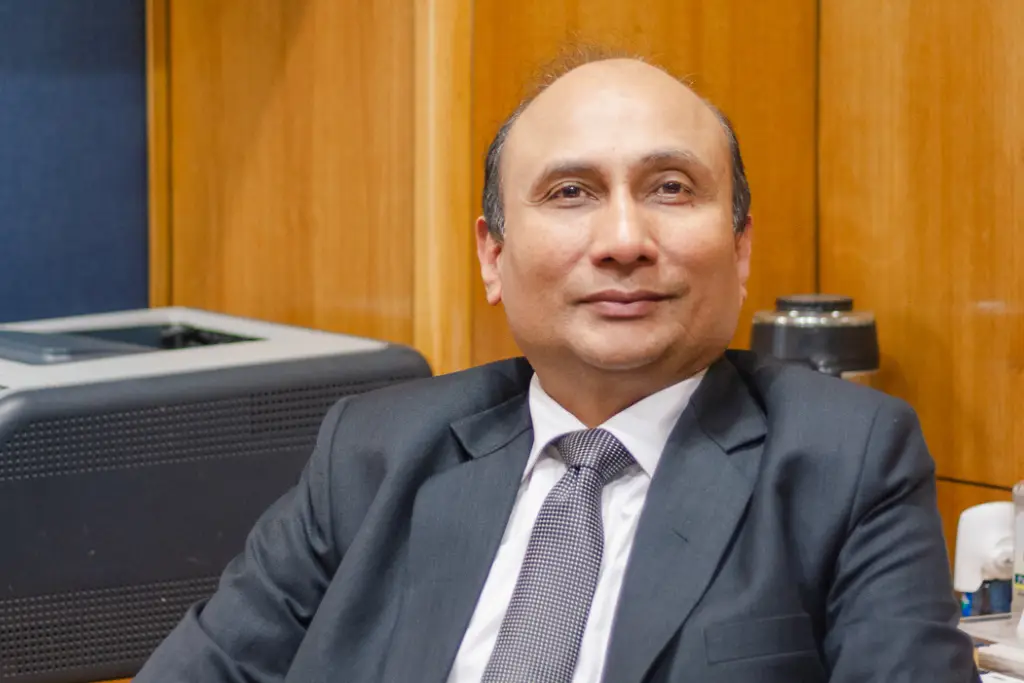
– By Tarun Khulbe, Chief Executive Officer, Jindal Stainless
India’s stainless steel industry is no longer a quiet beneficiary of infrastructure growth; it is becoming one of the core materials shaping the country’s next phase of industrialisation. From railways, metros, bridges and water systems to clean energy, green hydrogen, defence, mobility and premium urban infrastructure, stainless steel is steadily moving into applications where durability, safety, corrosion resistance and lifecycle value matter more than short-term cost.
For Indian producers, however, this opportunity comes with a complex set of challenges. Cheap and subsidised imports, FTA-linked trade flows, raw material security, chrome ore availability, quality enforcement, geopolitical disruptions and carbon-linked regulations are all testing the industry’s competitiveness. The sector’s next leap will, therefore, depend not merely on higher consumption, but on stronger standards, deeper value addition, circular manufacturing, technology adoption and a policy framework that recognises stainless steel as a strategic material for India’s growth.
With India’s infrastructure push gathering pace, the domestic stainless steel industry finds itself at an important turning point. At the centre of this transformation is Jindal Stainless, led by industry veteran Mr Tarun Kumar Khulbe. With over 35 years of experience, spanning his early career at Raymond Steel, which later became part of ThyssenKrupp, Germany, to leading major plant transformation and volume expansion initiatives at Jindal Stainless since 2004, Mr Khulbe has played an instrumental role in steering the organisation towards operational excellence and strategic growth.
Now serving as Chief Executive Officer, CFO and Whole Time Director, Mr Khulbe provides overall leadership and is responsible for key strategic decisions across the organisation.
In this conversation with Paresh Parmar, Editor, Minerals & Metals Review, he discusses India’s stainless steel growth trajectory, the challenge of imports, raw material security, the role of BIS standards and QCOs, recycling-led circularity, decarbonisation, technology adoption and the opportunity for India to emerge as a globally competitive stainless steel manufacturing hub.
How do you assess the current growth trajectory of India’s stainless steel industry?
India continues to be one of the strongest growth markets for stainless steel globally, supported by infrastructure expansion, manufacturing growth, urbanisation, and rising awareness around lifecycle cost and durability. Stainless steel consumption in India grew to nearly 4.8-4.9 million tonnes in FY25, reflecting approximately 8% Y-o-Y growth, despite global geopolitical and economic volatility.
At the same time, India’s per capita stainless steel consumption of 3.4kg in FY25 remains significantly below global averages of ~6kg, which indicates strong long-term headroom for growth. The next phase of the industry, however, will depend not only on volume, but also on capability building across quality standards, downstream value addition, recycling, raw material security, positive policy environment, technology adoption, and manufacturing competitiveness.
What are the strongest demand drivers for stainless steel in India today, and which sectors offer the best future growth?
Infrastructure remains among the stronger demand driver, particularly with large scale investments in railways, metro systems, airports, bridges, water infrastructure, and urban development. India’s manufacturing push and mobility transition are also increasing stainless steel usage across automotive, EVs, process industries, trailers and engineering applications.
Going forward, we see significant growth opportunities in clean energy, green hydrogen, desalination, ethanol, renewable energy infrastructure, defence, and advanced manufacturing. Consumer-facing applications such as water storage, architecture, elevators, and premium housing are also seeing stronger adoption as customers increasingly focus on durability, lower maintenance cycles and long-term performance.
How serious is the challenge of cheap imports, especially through FTA-linked routes, and what policy measures are needed?
The challenge is serious, particularly from subsidised and low-cost imports entering from China and the ones routed through ASEAN countries, taking benefit of the concessional tariffs under the ASEAN-India FTA. The concern is far more than commercial competitiveness as it is also linked to quality, safety, and long-term reputation of stainless steel applications.
India today has adequate manufacturing capability to cater to domestic demand. What the industry needs is stronger enforcement of BIS standards and Quality Control Orders (QCOs), faster trade-remedy mechanisms against unfair imports, and a policy framework that supports quality-led manufacturing and downstream value addition within the country.
What is your view on raw material security for stainless steel, particularly nickel, chrome ore, ferrochrome and stainless scrap?
Raw material security is a key strategic priority for the domestic stainless steel industry. Inputs such as nickel, chrome ore, ferrochrome, and stainless steel scrap are critical to long-term manufacturing competitiveness and supply-chain stability.
The recent geopolitical uncertainties prove this case in point. The industry needs stronger backward integration, diversified sourcing strategies, recycling infrastructure, and long-term raw material partnerships. At Jindal Stainless, for instance, the commissioning of our Nickel Pig Iron facility and stainless steel melting shop in Indonesia are both aligned with this broader objective of strengthening raw material security and supply-chain resilience.
Stainless steel scrap, in particular, will play an increasingly important role because it supports both sustainability and resource security. Better scrap integration in manufacturing will reduce import dependence and lower carbon intensity over the long term.
How do you assess the availability and pricing of chrome ore in India, and what mining policy reforms are required?
While India has chrome ore reserves, consistent availability of quality ore at globally competitive pricing remains a challenge for domestic stainless steel manufacturers. Pricing volatility and supply-side constraints directly impact manufacturing competitiveness.
The industry would benefit from policies that support greater exploration, long-term supply visibility, efficient mining operations, and stronger alignment between mining policy and India’s manufacturing ambitions. As India’s stainless steel production and consumption continue to grow, chrome ore will increasingly need to be viewed as a strategic and critical industrial resource rather than only a commodity input. Many countries are already taking steps to secure access to critical raw materials that underpin their manufacturing competitiveness, and India will need to adopt a similar long-term approach towards resource security.
What impact are global geopolitical developments having on stainless steel supply chains, raw material costs and trade flows?
Geopolitical developments are significantly impacting global supply chains, freight costs, energy pricing, raw material availability, and trade flows. In the recent past, the industry has seen increased volatility arising from conflicts, sanctions, logistics disruptions, and changing trade regulations.
Trade flows are also changing with markets such as Europe and the US increasingly becoming more regulated through tariffs, CBAM-related mechanisms, safeguard measures, and localisation requirements. As a result, export strategies now require greater agility, portfolio diversification, and compliance readiness.
This environment is pushing manufacturers globally to focus more on supply-chain resilience, regional variety, backward integration, and operational efficiency and flexibility. More and more nations are now advocating for localisation rather than globalisation.
It also creates an opportunity for India to strengthen its position as a reliable manufacturing and supply base, and reform its policy structure to ensure that Indian markets are served by Indian manufacturers.
How important are BIS standards, Quality Control Orders and grade standardisation for the future of the industry?
They are absolutely critical as they directly impact end consumers. Stainless steel today is widely used in infrastructure, transportation, food processing, water systems, healthcare, and industrial applications where quality and performance issues can hamper public safety and structural integrity.
BIS standards and QCOs help ensure product reliability, protect consumers, and prevent the proliferation of substandard imports. Grade standardisation is equally important because misuse or incorrect substitution of grades can compromise performance, damage confidence in the material category itself, and impact downstream applications.
At a broader level, strong standards also help Indian manufacturers compete globally because they encourage process discipline, technology adoption, and sustainable practices.
What role will recycling and stainless steel scrap play in reducing import dependence and improving sustainability?
Recycling and stainless steel scrap will play a central role in the future of the industry from both sustainability and resource-security perspectives. Stainless steel is inherently a circular material and can be recycled repeatedly without compromising quality. At Jindal Stainless, recycled input utilisation stands at around 72%, as we rapidly build our circular production routes.
Increasing organised scrap collection, segregation, and processing infrastructure in India can significantly reduce import dependence, improve resource efficiency, and lower carbon footprint, strengthening supply chain resilience.
As sustainability requirements tighten globally, scrap utilisation will increasingly become both an environmental and strategic advantage.
How is the industry preparing for decarbonisation, ESG requirements and global carbon regulations such as CBAM?
The industry is actively moving towards lower-carbon manufacturing through renewable energy integration, improved energy efficiency, circular manufacturing, waste heat recovery, and emerging technologies such as green hydrogen.
At Jindal Stainless, we have committed to achieving Net Zero emissions by 2050 and reducing carbon emissions intensity by 50% by FY35. This transition is being supported through our large-scale renewable energy partnerships, green hydrogen projects, process optimisation, and increasing recycled input utilisation. In FY25 alone, we reduced approximately 3.18 lakh tonnes of CO₂ emissions through various decarbonisation initiatives.
Global carbon regulations such as CBAM are making sustainability not only an environmental issue, but also a competitiveness and market-access issue. As a result, companies are increasingly focusing on emissions reduction, carbon accounting, ESG transparency, and low-carbon manufacturing pathways. In the coming years, sustainability performance will increasingly become integrated with commercial competitiveness, financing access, customer preference, and export viability.
What role can stainless steel play in clean energy applications, including green hydrogen, renewables, desalination and energy infrastructure?
Applications such as green hydrogen, renewable energy systems, desalination plants, biofuels, nuclear energy, and energy infrastructure require materials capable of withstanding corrosion, high temperatures, aggressive environments, and long operational cycles. This makes stainless steel a critical enabler of the clean energy transition because of its properties being uniquely suited for such demanding environments.
Stainless steel is therefore expected to see growing adoption across sectors as India accelerates its clean energy ambitions.
What technology trends are shaping stainless steel manufacturing and downstream value addition?
The industry is increasingly moving towards automation, digital manufacturing, AI-led process optimisation, predictive analytics, and smart manufacturing systems. Smart Factory 4.0 model is also being integrated at Jindal Stainless to enable real-time operational efficiency. Sustainability-led technologies such as renewable energy integration, process electrification, and green hydrogen are also becoming core operational priorities.
At the same time, downstream value addition is gaining significance through specialised grades, precision manufacturing, advanced finishes, and customised application development. The next phase of competitiveness will be driven as much by technology and innovation as by scale.
What are your company’s key priorities in terms of expansion, product development, exports, sustainability and market growth?
Our priorities remain focused on strengthening manufacturing capabilities, expanding value-added product offerings, raw material security, deepening sustainability initiatives, and supporting long-term market development.
We are increasing our stainless steel melt capacity to 4.2 million tonnes and strengthening downstream capabilities across cold rolling and value-added segments. We also remain focussed on specialised and high-performance applications across infrastructure, mobility, clean energy, defence, aerospace, process industries, and precision engineering.
Sustainability remains a core strategic pillar for us as we continue to invest in renewable energy, green hydrogen, circular manufacturing, emissions reduction, and ESG integration across operations.
Even as India remains our primary growth engine, we are diversifying global presence across multiple geographies while focusing on higher-value export segments. At the same time, we continue to invest significantly in ecosystem development under our education and skilling movement, Stainless Academy, through reskilling and upskilling programmes, and industry-academia collaborations.
What policy support does the Indian stainless steel industry need from the government?
The industry requires a continued support and investment towards quality enforcement, fair trade practices, raw material security, and sustainability transition. This includes inclusion of right standards in BIS, QCOs and deterrent duties on dumping.
A stable policy environment will also encourage domestic producers to invest in capacity expansion, downstream value addition, R&D, and advanced manufacturing with confidence. This also aligns with the broader objectives of Make in India and Atmanirbhar Bharat.
Equally important is the need for a dedicated National Stainless Steel Policy given the unique nature of stainless steel applications and manufacturing. Streamlining the ease-of-doing-business can significantly enhance competitiveness while fostering innovation across the value chain.
What is your five-year outlook for the Indian stainless steel sector?
We remain very optimistic about the sector’s long-term outlook. India’s infrastructure expansion, manufacturing growth, urbanisation, energy transition, and rising quality consciousness are expected to continue driving strong stainless steel demand over the next five years. Industry estimates suggest India’s stainless steel demand could continue growing at 7-8% annually over the medium term.
The industry is also expected to evolve towards greater value addition, sustainability, specialised applications, recycling, and technology-led manufacturing. We believe India has the opportunity to emerge as a globally competitive stainless steel manufacturing hub because of its growing domestic market, manufacturing capabilities, and expanding industrial ecosystem.
What message would you like to give to policymakers, customers and the wider stainless steel value chain?
Among the fastest growing markets for stainless steel in the world, India has a significant opportunity to build a future-ready stainless steel ecosystem aligned with the country’s infrastructure, manufacturing, and sustainability ambitions.
For policymakers, continued support towards quality standards, raw material security, and manufacturing competitiveness will remain important. For customers, the focus should increasingly move towards lifecycle value, durability, safety, and sustainability rather than only upfront cost. This movement has already started in pockets and this value-driven mindset is expected to continue as our nation grows.
For the wider value chain, collaboration across manufacturers, MSMEs, recyclers, academia, and industry stakeholders will be essential for effective evolution of the entire ecosystem towards capability building, innovation, skilling, and responsible manufacturing.
India’s stainless steel story is still at a nascent stage but the opportunity ahead is significant, and the industry has the potential to become an important pillar of the country’s long-term industrial and infrastructure growth.
This article was published on Minerals & Metals Review in June 2026.
Share: