
The most
expensive part
of coal logistics
is not fuel.
it’s corrosion.
Here’s how coal tipper manufacturers can ensure tippers that earn more and last longer.
India's coal economy is one of the largest in the world. At the centre of this supply chain are tens of thousands of tippers and tip-trailers; critical assets in the coal transportation ecosystem, operating day after day across some of India’s most demanding terrain.
Yet many of these vehicles are still built using conventional materials that struggle to meet the long-term demands of coal transportation.
Industry at a Glance
Production (FY25)
The Problem with Conventional Steel Bodies
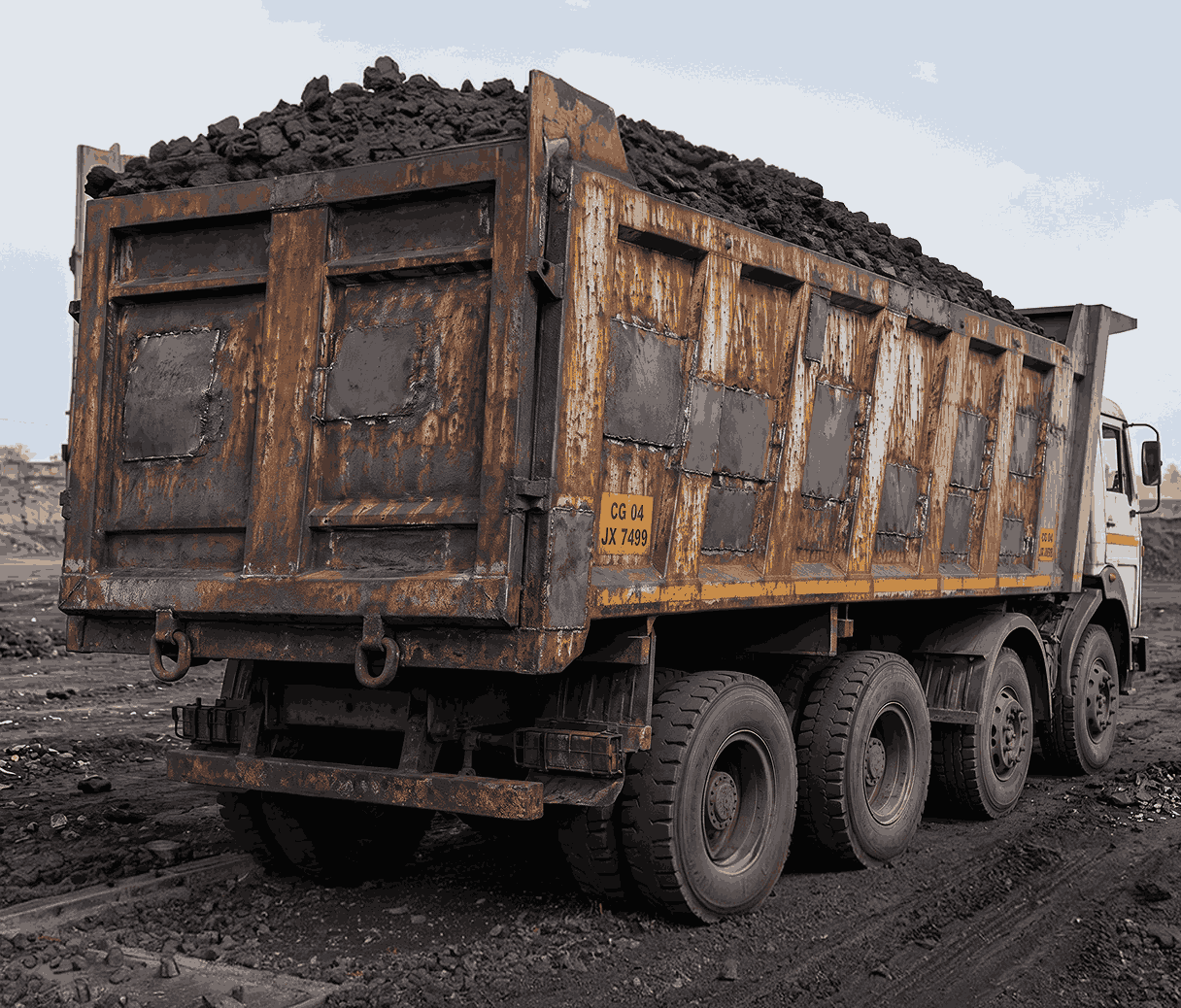
Walk through any major coal-producing region; Chhattisgarh, Odisha, Jharkhand, or Madhya Pradesh and you will find a familiar sight: tipper bodies streaked with rust, welded patches covering corroded panels, and vehicles taken off the road years before their chassis have given up.
Conventional carbon steel grades such as E250, E350, and BSK-46 continue to be widely used across the coal transportation industry. However, prolonged exposure to wet and beneficiated coal, which can contain significant moisture and sulphur content creates a highly corrosive operating environment for tipper bodies.
Over time, this exposure can accelerate corrosion around weld joints, seams, and exposed surfaces, contributing to higher maintenance requirements, reduced body life, and increased lifecycle costs for fleet operators.
 Pain Point
 Root Cause
 Impact



Corrosion & Rust

High Replacement Costs

Dead Weight & Lost Payload
Import Trap (Hardox)

11% moisture + 1.8% sulphur in coal attacks welds, joints, and exposed panels

Heavy corrosion destroys carbon steel bodies in as little as 8 years
Heavier body reduces payload per trip, cutting into revenue
Foreign exchange volatility and supply disruptions from imported wear steel

Vehicle scrapped in 8–10 years

₹5 lakh wasted per trailer over 12 years
620 kg of revenue lost per trip

100% import risk on margin
Pain Point

Corrosion & Rust
High Replacement Costs
Dead Weight & Lost Payload
Import Trap (Hardox)
Root Cause

11% moisture + 1.8% sulphur in coal attacks welds, joints, and exposed panels
Heavy corrosion destroys carbon steel bodies in as little as 8 years
Heavier body reduces payload per trip, cutting into revenue
Foreign exchange volatility and supply disruptions from imported wear steel
Impact

Vehicle scrapped in 8–10 years
₹5 lakh wasted per trailer over 12 years
620 kg of revenue lost per trip
100% import risk on margin
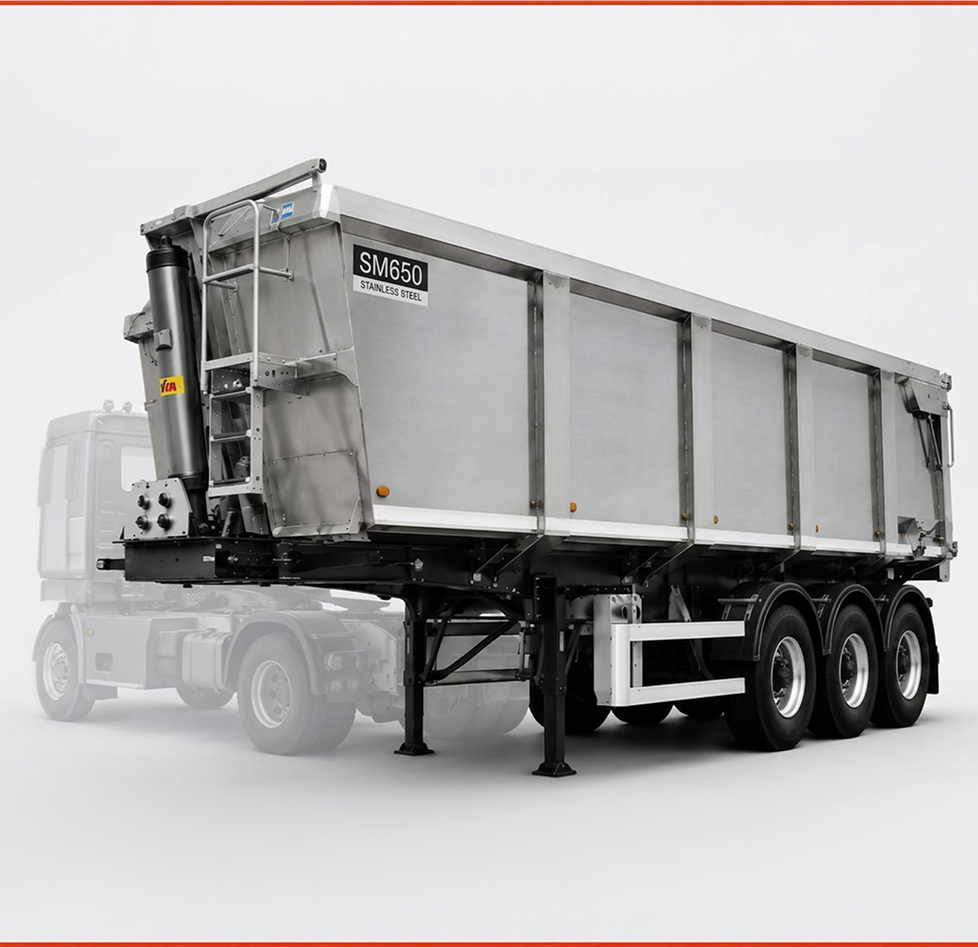
SM650: Engineered for Coal Transport
Jindal Stainless, India's largest stainless steel manufacturer, developed SM650 specifically for heavy transport applications.
Corrosion
resistance

High
strength
Weight
saving
SM650 is a Super Martensitic Stainless Steel (equivalent to SS 415) that delivers a combination of properties no carbon steel or imported alternative can match.
The Lightweighting Advantage: 32 CBM Tipper-Trailer Comparison
Component-by-component substitution of BSK-46 with SM650 delivers a verified 20-25% weight reduction on a 32 CBM tip-trailer without any compromise in structural integrity.
620 kg saved per trailer. At ₹1/kg freight rate with 22 trips/month, that generates ₹13,660 in additional freight revenue monthly, plus ₹1,525 in diesel savings, totalling ₹15,185 extra earnings per trailer, per month.
The Financial Picture: 15-Year Life Cycle
The incremental cost to upgrade a tip-trailer body from BSK-46 to SM650 is approximately ₹2.70 lakh. The life cycle analysis tells a compelling story.

20 years or more of service life

Near-zero maintenance

No rust treatment

No repainting

No patch welding

55% more scrap value than carbon steel
Proven in the Field: The OFC Case Study
A leading Maharashtra-based fleet operator (OFC) running coal tippers across Western Coalfields was experiencing severe corrosion near joints and rapid wear with E250 carbon steel bodies. Imported Hardox was the perceived upgrade, but supply risk and price volatility were mounting.
Chhattisgarh-based fabricator Vandana Agro engaged with Jindal Stainless and redesigned the BOM using SM650 for flooring, the highest-wear, highest-corrosion component; while retaining BSK-46 for side walls. The conversion from 4 mm to 3 mm thickness delivered a verified 202 kg weight reduction per truck.
“We’re proud to partner with a homegrown brand, JSL, that delivers both authenticity and real value. The material finish is consistently smooth, which brings ease of loading and overall operations, something we haven’t experienced with imported alternatives like Hardox. One of the biggest advantages for us has been the lightweighting of our vehicles, helping improve efficiency without compromising performance.”
Lighter Tippers, Faster Returns: Jindal Logistics, Jajpur
For Jindal Logistics, stainless steel tippers delivered measurable gains from day one.
 Weight
reduction 588 kg
 Incremental
investment Rs. 1.87 lakhs
 Payback period
within 1.0 year
Key Benefit: Higher payload potential and improved fleet economics.
SM650 vs the Alternatives
Why This Matters for Fabricators

Tipper and tip-trailer fabricators in Chhattisgarh account for approximately 40% of the national market, an estimated 24,000 vehicles built each year. That scale makes the fabrication community in this region one of the most consequential groups in India’s coal logistics ecosystem.
Switching to SM650 is not simply a material change; it is a competitive repositioning. Fabricators adopting stainless steel can offer fleet owners a verifiable and documented performance advantage through longer body life, lower total cost of ownership, and reduced dependence on imported materials.
Jindal Stainless supports this transition with:

Direct engineering engagement and BOM redesign assistance

Fabricator training and technical onboarding

Stable domestic supply with no import dependency

Fabricator training and technical onboarding
Building the Future of Coal Transport
India’s coal production is on course to reach 1.3–1.5 billion tonnes by 2030. Every tonne of that coal will need to move. The question for fleet owners and fabricators is not whether transportation capacity will grow; it will. The question is what that capacity will be built from.
Carbon steel bodies will continue to corrode, wear, and be replaced. Import-dependent materials will continue to expose margins to currency and supply risk. Or the industry can move to a material that is stronger, lighter, longer-lasting, domestically produced, and proven in the field.
That material is SM650 from Jindal Stainless.